9789863895 CIVILONE RESEARCH CENTRE PVT LTD

Top Ndt Testing Lab in Chennai, NDT Services in Chennai

Leading NDT Testing Lab in Chennai – Civilone Research Centre Pvt Ltd

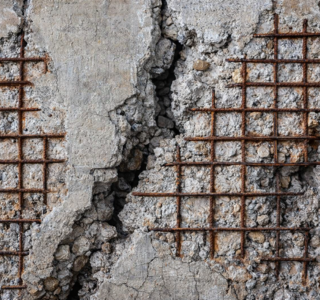
As concrete structures age, they are subjected to environmental weathering, chemical attacks, and structural fatigue. Whether you are planning to add additional floors to an existing building, assessing a fire-damaged property, or performing routine quality audits on a new construction project, you need to know the internal health of your concrete without destroying it.

If you are looking for a certified and technologically advanced NDT testing lab in Chennai, Civilone Research Centre Pvt Ltd is your premier choice. We offer high-precision NDT services in Chennai to evaluate the strength, homogeneity, and overall integrity of concrete structures quickly, safely, and accurately.
The Importance of Non-Destructive Testing (NDT)

Traditional testing methods often require breaking concrete cubes or cutting major structural elements, which isn't always practical or safe for existing edifices. Non-Destructive Testing (NDT) bypasses this issue entirely. By using advanced acoustic, electromagnetic, and mechanical methods, we can peer inside columns, beams, and slabs to diagnose hidden defects.

NDT acts as an essential health checkup for your building, identifying issues like deep voids, honeycombing, internal cracks, and reinforcement corrosion before they escalate into costly or hazardous structural failures.

Our Specialized NDT Services in Chennai

At Civilone Research Centre, we employ a diverse range of modern testing methodologies compliant with Indian Standards (IS) and international guidelines:

  •   Rebound Hammer Test : A quick, reliable surface hardness test used to estimate the compressive strength of the concrete across various structural components.
  •   Ultrasonic Pulse Velocity (UPV) Test : Sending sound waves through concrete to map internal voids, detect hidden cracks, and grade the overall quality and homogeneity of the material.
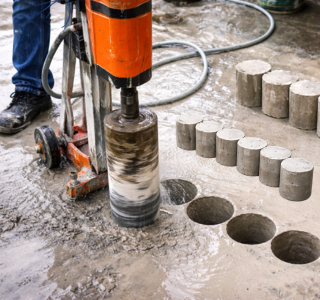
  •   Core Drilling & Compaction Testing : Extracting localized concrete core samples to perform direct crushing tests, providing the absolute closest measurement of in-situ compressive strength.
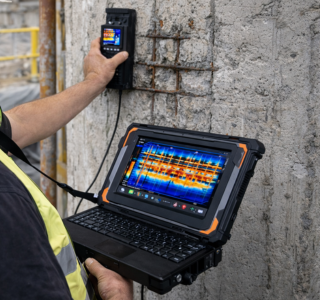
  •   Rebar Mapping & Cover Meter Survey : Locating embedded steel reinforcement bars, measuring concrete cover depth, and determining rebar diameter without breaking the surface.
  •   Chemical Analysis (Carbonation & Chloride Tests) : Determining the depth of carbonation and chemical ingress to estimate the remaining lifespan of the structural reinforcement.

Why Choose Civilone Research Centre Pvt Ltd?

When evaluating structural safety, there is no room for error. Property owners, structural consultants, and government bodies trust our NDT testing lab in Chennai because we deliver:

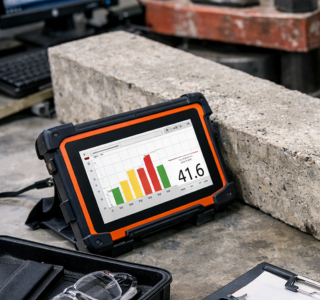
  •   Advanced Diagnostic Equipment : We use highly calibrated, industry-standard digital instruments that capture real-time data with maximum accuracy.
  •   Certified NDT Technicians : Our team comprises certified civil engineers and technicians specialized in structural forensics and health monitoring.
  •   Comprehensive Analytical Reports : We deliver highly detailed, easy-to-interpret reports complete with structural cross-references and engineering recommendations.
  •   Fast & Reliable Turnaround : We conduct on-site testing with minimal disruption to your daily operations and deliver prompt digital reports to accelerate your decision-making.

Evaluate and Protect Your Structural Investment

Don't let hidden structural flaws jeopardize the safety of your building. Partner with Civilone Research Centre Pvt Ltd for accurate, engineering-backed NDT services in Chennai.

Contact Civilone Research Centre Pvt Ltd today to book a structural audit or request a detailed quote for your project.

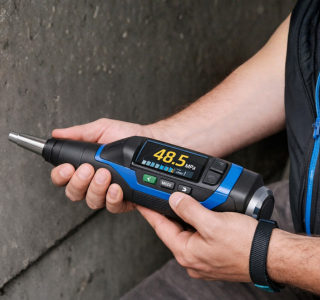
Rebound Hammer

The Rebound Hammer test, also widely known as the Schmidt Hammer test, is a standard non-destructive testing (NDT) method used in civil engineering to evaluate the surface hardness of hardened concrete. This rapid and cost-effective technique allows engineers to assess the material's quality directly on-site without causing any structural damage or alteration to the building components.

The test operates by releasing a spring-loaded steel mass against a plunger pressed against the concrete surface, causing the mass to rebound after impact. The distance traveled by the mass during this recoil is measured on a graduated scale and recorded as a rebound number (or rebound value), which serves as a direct indicator of the concrete's surface stiffness.

Carbonation Concrete Service

Carbonation of concrete in cover results in loss of protection to the steel against corrosion. The depth of carbonation can be measured by spraying the freshly fractured concrete surface with a 0.2% solution of phenolphthalein in ethanol.

Carbonation is a naturally occurring chemical process where atmospheric carbon dioxide ($CO_2$) penetrates concrete and reacts with the cement paste. This reaction reduces the concrete's natural, highly alkaline pH, which ultimately destroys the protective layer surrounding the embedded steel reinforcement. As a result, the steel becomes highly susceptible to corrosion, a critical issue that can weaken the entire structure and significantly reduce its overall lifespan.

To determine how far this reaction has progressed, the depth of carbonation can be accurately measured by spraying a freshly fractured concrete surface with a 0.2% solution of phenolphthalein in ethanol. This solution acts as a pH indicator, visibly mapping the boundaries of the damage. The unaffected, highly alkaline concrete turns a distinct pink color, while the carbonated, low-alkaline areas remain completely colorless, allowing engineers to see exactly how much protective cover remains.

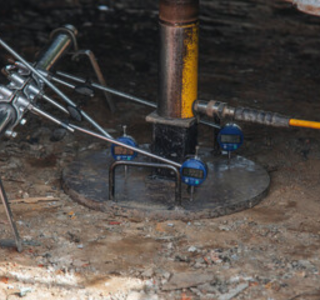
Plate Load Test

The Plate Load Test is a crucial field test used in civil engineering to determine the ultimate bearing capacity and settlement characteristics of soil. Commonly conducted before the construction of buildings, roads, bridges, and other infrastructure projects, this test evaluates the soil's fundamental ability to support structural loads. By simulating actual loading conditions on-site, it provides engineers with vital data regarding how the ground will perform under the weight of a future structure.

At TMTL, our professional Plate Load Testing services are carried out using advanced equipment and highly skilled technical personnel. We ensure precise data collection and rigorous analysis in strict accordance with the relevant Indian Standard (IS) codes. This high level of precision guarantees that the empirical data gathered from the field is both reliable and compliant with industry regulations.

Pile Load Test

The Pile Load Test is an essential field procedure designed to determine the ultimate load-carrying capacity and settlement behavior of deep foundation piles. This critical evaluation helps engineers verify that the installed piles can safely support the intended design loads and fully meet project-specific engineering requirements. By simulating real-world stress, the test assesses how the deep foundation element behaves under intense pressure before the actual superstructure is built.

At TMTL, we conduct both static and dynamic pile load tests using modern testing systems to ensure the precise measurement of pile performance. Our advanced diagnostic methods allow us to accurately evaluate the pile's ultimate bearing capacity, settlement characteristics, and overall structural integrity under various load conditions. By utilizing highly precise monitoring equipment, we ensure that every piece of data captured reflects the true physical limits of the foundation.

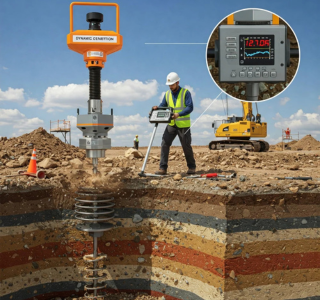
Dynamic Cone Penetration Test

The Dynamic Cone Penetration Test (DCPT) is a highly effective, field-based soil investigation method used to evaluate the in-situ strength and compaction characteristics of soil layers. The test directly measures soil resistance by recording the number of standardized hammer blows required to drive a conical tip into the ground. This straightforward mechanism provides engineers with immediate, valuable data regarding soil consistency, density, and subgrade conditions.

At TMTL, we conduct DCPT using a standardized cone and hammer setup to precisely determine the penetration resistance of various soil layers. Our technical approach ensures accurate data collection, which is essential for mapping out soil profiles and evaluating the ground's ultimate bearing capacity. By utilizing modern field equipment and proven methodologies, we deliver highly reliable metrics that form the backbone of sound engineering analysis.

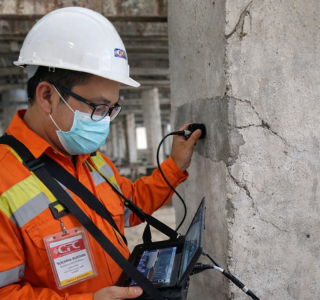
UPVT

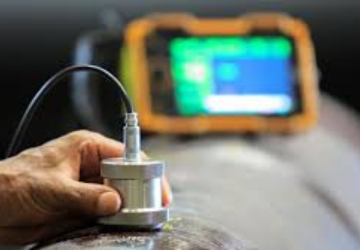
The Ultrasonic Pulse Velocity Test (UPVT) is a highly reliable non-destructive testing (NDT) method used to assess the overall quality, uniformity, and internal integrity of concrete structures. This technique functions by measuring the transit time and speed of high-frequency ultrasonic pulses as they pass through the material. By analyzing variations in velocity, engineers can accurately identify internal anomalies such as cracks, voids, honeycombing, and other hidden structural defects that are invisible to the naked eye.

To conduct these advanced diagnostic assessments, the Cronosonic is utilized—a specialized tool designed for precise ultrasonic tests through transparency. This advanced equipment is highly versatile and can be effectively deployed across a wide range of elements, including bulkheads, beams, diaphragms, and standard laboratory core samples, as well as various other concrete or natural stone structures. The technology ensures that internal density and elastic properties are measured with exceptional accuracy.

Concrete Core Service

Concrete Core Drilling is a specialized process of boring precise holes through concrete, reinforced concrete, brick, block, stone, and masonry. This method is primarily executed when a physical material sample is required for testing or when clear passage and access holes must be created through thick structural elements. Because of its precision and versatility, industries that extensively rely on this critical service include civil construction and mineral exploration.

Our specialized Concrete Core Service involves the careful extraction of intact, cylindrical core samples directly from hardened concrete structures. Unlike surface-level non-destructive testing, this extraction method provides engineers with direct, highly reliable, and definitive information about the true in-situ properties of the material. It remains the industry gold standard for capturing the actual internal condition of a structure.

Half Cell Potential Test

The Half Cell Potential Test is an advanced, non-destructive electrochemical method used to assess the probability of corrosion in steel reinforcement embedded within concrete structures. It works by measuring the electrical potential difference between the reinforcing steel and a standard reference electrode placed on the concrete surface. This allows engineers to identify hidden areas where active corrosion may be occurring long before any visible cracks, spalling, or rust stains appear on the surface.

Our professional Half Cell Potential Test service provides an accurate evaluation of reinforcement corrosion risks, enabling early detection and targeted preventive maintenance. By locating early-stage corrosion hotspots, the test results provide invaluable data for structural durability assessments. This proactive approach allows asset owners to implement timely interventions, ultimately extending the service life of buildings, bridges, and other reinforced concrete structures.

Rebar Locator

The Rebar Locator Test is a highly efficient non-destructive testing (NDT) method used to detect the exact position, depth, spacing, and approximate diameter of reinforcing steel bars embedded within concrete structures. Operating on electromagnetic induction principles, this specialized test allows technicians to map out the entire internal reinforcement framework. This precise identification happens entirely from the surface, completely eliminating the need for destructive chipping or drilling.

Backed by our enormous understanding and massive knowledge of this business, we are deeply involved in offering premier Rebar Locator Services. Our professional mapping solutions provide accurate, high-resolution details of embedded reinforcement layouts, making them ideal for comprehensive structural assessments, renovation projects, core drilling operations, and routine quality control inspections. By utilizing the latest scanning technologies, we ensure that every hidden detail is brought to light with maximum precision.

Call Now